When AI Does Everything, What Should We Teach Our Children?
페이지 정보
작성자 장명술 편집장 작성일본문
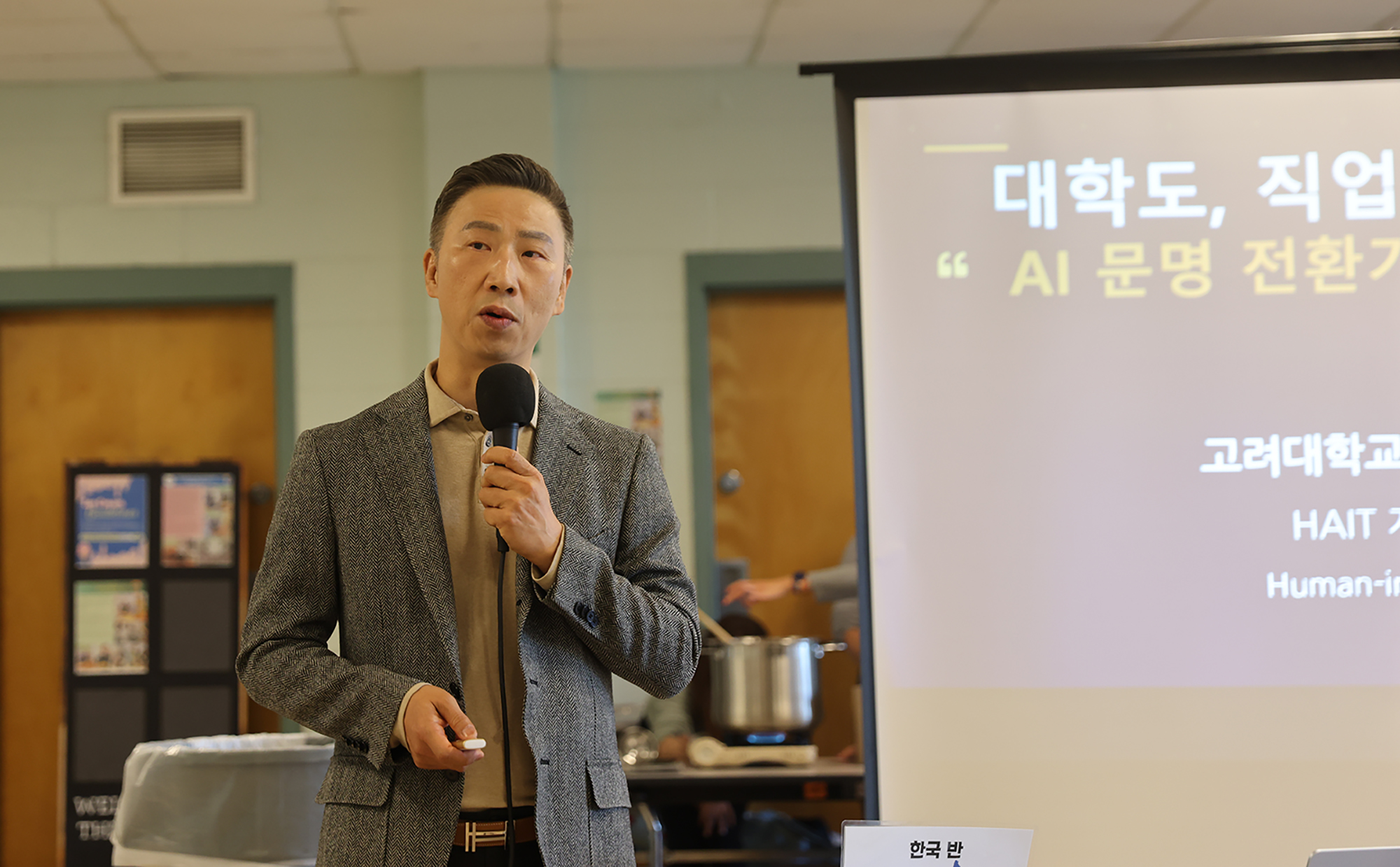
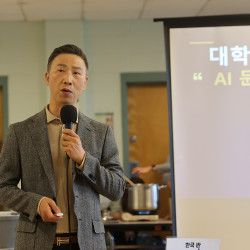
Professor Lim Hee-seok of Korea University's Department of Computer Science
(Boston = Boston Korea) Reporter Myong Sool Chang = In an era when artificial intelligence (AI) writes articles and even creates programs, what should children learn? Professor Lim Hee-seok of Korea University's Department of Computer Science emphasized that before chasing promising technologies and careers, children must develop the ability to think deeply and make sound judgments.
On October 10, Professor Lim gave a lecture to parents at the New England Korean School, explaining the changes AI will bring to education and the job market, and stressed that as technology changes rapidly, we must pay attention to uniquely human capabilities.
"In such a rapidly changing era, shouldn't we first learn, teach, and discuss the things that don't change?" he asked, setting the theme for his lecture.
Professor Lim identified the "democratization of advanced knowledge" as a key change in the AI era. Knowledge that was once accessible only to experts or people in specific positions is now easily available to anyone through AI. As a result, he explained, it's becoming increasingly difficult to gain a competitive edge simply by knowing more information than others.
He said AI's role is also expanding from answering questions to actually performing tasks. With the emergence of "agent-type AI" that divides necessary tasks and executes them in order when users present goals, individuals' capabilities and opportunities are growing, he explained.
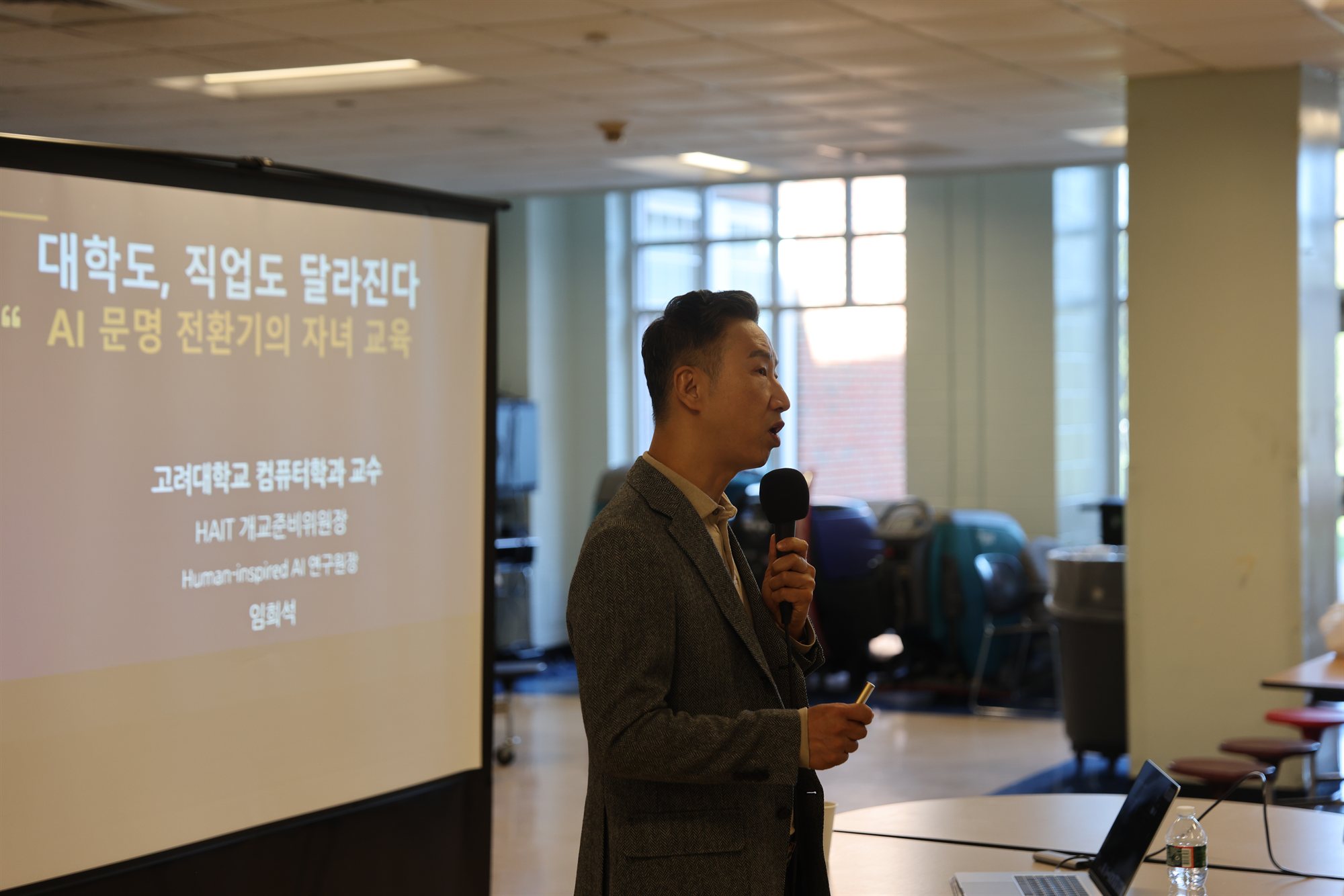 Professor Lim Hee-seok's lecture
However, he pointed out that we should not only look at what technology makes possible, but also examine what abilities people lose in the process. Professor Lim expressed concern that the ability to read long texts, think deeply, build relationships with others, and practice patience could weaken.
He compared the practice of quickly skimming through various information on the internet to merely floating on the ocean's surface. Just as you need to dive deep to truly understand the ocean, accessing a lot of information is different from deeply understanding content, he explained.
He also said we should not judge the value of life solely by efficiency. Preparing food together as a family takes time, but conversation and relationships are formed in the process. He explained that saving time with technology doesn't always mean better outcomes.
Regarding coding education, which is of great interest to parents, he emphasized that the need to learn coding doesn't disappear just because AI can write programs. The educational value of coding lies not only in the program as an end product, but in logically analyzing problems and designing the problem-solving process, he explained.
Professor Lim said, "Learning to code is not just about creating programs, but about learning how to think logically and how to logically solve the problems we're trying to address."
He explained that the ability to create outputs using AI must be distinguished from the ability to judge whether those results are correct. For children to collaborate with AI, they must have both the ability to clearly instruct what they want done and the competence to review the results AI produces.
Regarding career choices, he urged parents not to believe too strongly in predictions that definitively forecast the future of specific jobs. He explained that while concerns about disappearing jobs have been repeated with each new technology, careers and values that were unimaginable at the time have also emerged. However, he added that we cannot guarantee the same outcome will occur in the AI era simply because new jobs were created in the past.
Professor Lim identified areas where human roles will remain important: final judgment and responsibility, care and relationships, problem-solving in unpredictable field situations, and creative strategy development. He cited examples such as nurses and childcare teachers, whose work centers on human relationships, and plumbers and electricians, who must respond to different on-site situations.
He saw AI as a new opportunity for experienced middle-aged and older adults as well. In the past, even with good ideas, they needed others' help for development or execution, but now there's greater possibility of connecting their experience and judgment to business ventures using AI.
In the latter part of his lecture, he noted that university education has become too focused on acquiring knowledge and skills favorable for employment. Along with learning rapidly changing technologies, he argued, students must develop an understanding of humanity and society, judge what is right, and cultivate the wisdom to apply knowledge to real problems.
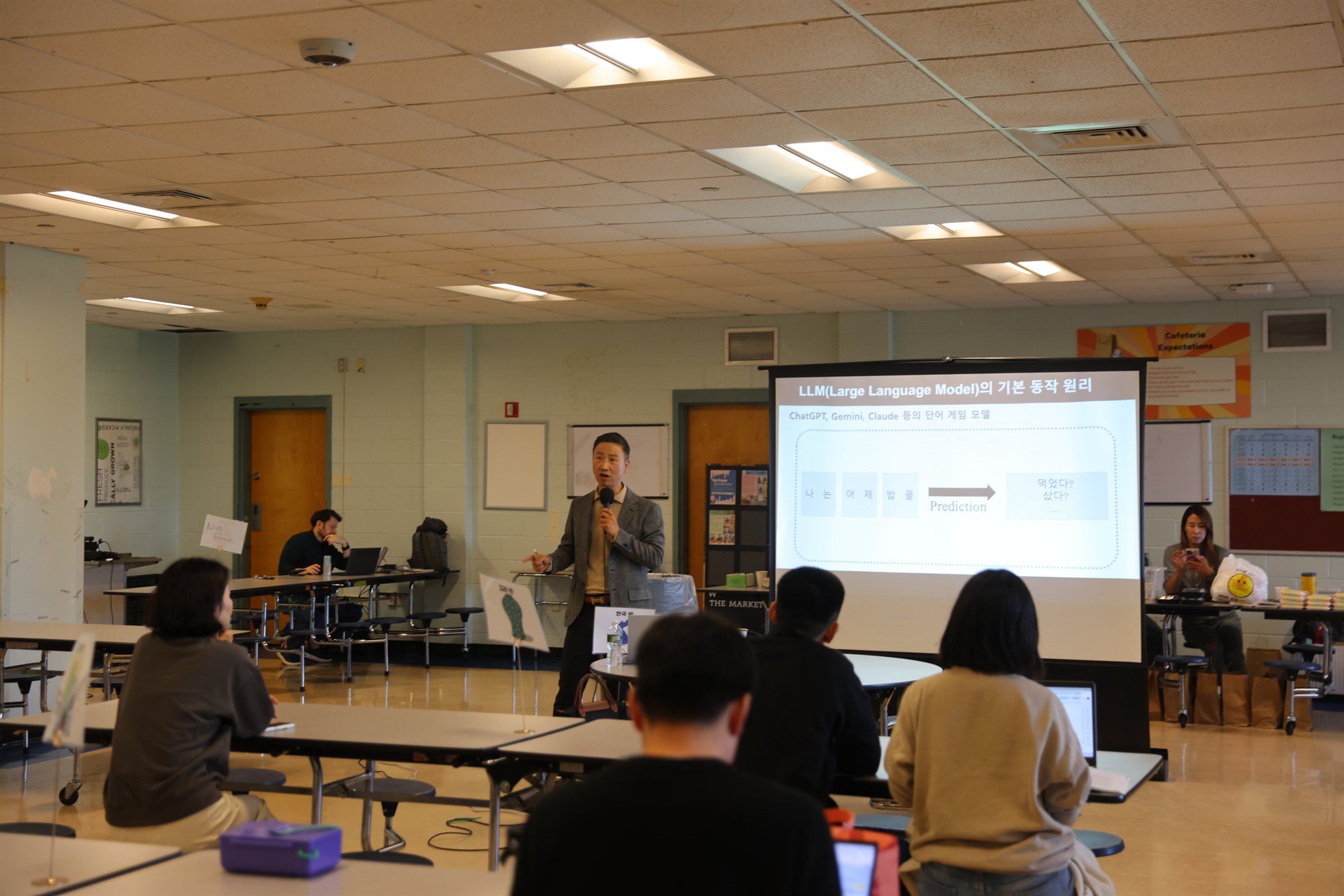 Many parents listening attentively to Professor Lim Hee-seok's lecture
He outlined the competencies the next generation should develop: sound values, deep thinking and reading abilities, the ability to collaborate with AI, and an attitude of lifelong learning to adapt to change. From a Christian perspective, he also emphasized the importance of spirituality and moral responsibility.
Professor Lim introduced his work preparing to establish an international university in the AI field in Chiang Rai, northern Thailand, to realize this educational vision. He stated that the goal is to nurture talent equipped with both technical capabilities and values, who can solve problems in their local communities while maintaining a global perspective.
[email protected]
On October 10, Professor Lim gave a lecture to parents at the New England Korean School, explaining the changes AI will bring to education and the job market, and stressed that as technology changes rapidly, we must pay attention to uniquely human capabilities.
"In such a rapidly changing era, shouldn't we first learn, teach, and discuss the things that don't change?" he asked, setting the theme for his lecture.
Professor Lim identified the "democratization of advanced knowledge" as a key change in the AI era. Knowledge that was once accessible only to experts or people in specific positions is now easily available to anyone through AI. As a result, he explained, it's becoming increasingly difficult to gain a competitive edge simply by knowing more information than others.
He said AI's role is also expanding from answering questions to actually performing tasks. With the emergence of "agent-type AI" that divides necessary tasks and executes them in order when users present goals, individuals' capabilities and opportunities are growing, he explained.
Professor Lim Hee-seok's lectureHowever, he pointed out that we should not only look at what technology makes possible, but also examine what abilities people lose in the process. Professor Lim expressed concern that the ability to read long texts, think deeply, build relationships with others, and practice patience could weaken.
He compared the practice of quickly skimming through various information on the internet to merely floating on the ocean's surface. Just as you need to dive deep to truly understand the ocean, accessing a lot of information is different from deeply understanding content, he explained.
He also said we should not judge the value of life solely by efficiency. Preparing food together as a family takes time, but conversation and relationships are formed in the process. He explained that saving time with technology doesn't always mean better outcomes.
Regarding coding education, which is of great interest to parents, he emphasized that the need to learn coding doesn't disappear just because AI can write programs. The educational value of coding lies not only in the program as an end product, but in logically analyzing problems and designing the problem-solving process, he explained.
Professor Lim said, "Learning to code is not just about creating programs, but about learning how to think logically and how to logically solve the problems we're trying to address."
He explained that the ability to create outputs using AI must be distinguished from the ability to judge whether those results are correct. For children to collaborate with AI, they must have both the ability to clearly instruct what they want done and the competence to review the results AI produces.
Regarding career choices, he urged parents not to believe too strongly in predictions that definitively forecast the future of specific jobs. He explained that while concerns about disappearing jobs have been repeated with each new technology, careers and values that were unimaginable at the time have also emerged. However, he added that we cannot guarantee the same outcome will occur in the AI era simply because new jobs were created in the past.
Professor Lim identified areas where human roles will remain important: final judgment and responsibility, care and relationships, problem-solving in unpredictable field situations, and creative strategy development. He cited examples such as nurses and childcare teachers, whose work centers on human relationships, and plumbers and electricians, who must respond to different on-site situations.
He saw AI as a new opportunity for experienced middle-aged and older adults as well. In the past, even with good ideas, they needed others' help for development or execution, but now there's greater possibility of connecting their experience and judgment to business ventures using AI.
In the latter part of his lecture, he noted that university education has become too focused on acquiring knowledge and skills favorable for employment. Along with learning rapidly changing technologies, he argued, students must develop an understanding of humanity and society, judge what is right, and cultivate the wisdom to apply knowledge to real problems.
Many parents listening attentively to Professor Lim Hee-seok's lectureHe outlined the competencies the next generation should develop: sound values, deep thinking and reading abilities, the ability to collaborate with AI, and an attitude of lifelong learning to adapt to change. From a Christian perspective, he also emphasized the importance of spirituality and moral responsibility.
Professor Lim introduced his work preparing to establish an international university in the AI field in Chiang Rai, northern Thailand, to realize this educational vision. He stated that the goal is to nurture talent equipped with both technical capabilities and values, who can solve problems in their local communities while maintaining a global perspective.
[email protected]
This article was translated from the Korean original with the assistance of AI and reviewed by Boston Korea editors.
Original Korean article: https://bostonkorea.com/bbs/board.php?bo_table=news&wr_id=46763
Read next
댓글목록
등록된 댓글이 없습니다.