Korean Babson Student's Matcha Takes Boston by Storm as byChae Opens F…
페이지 정보
작성자 장명술 편집장 작성일본문
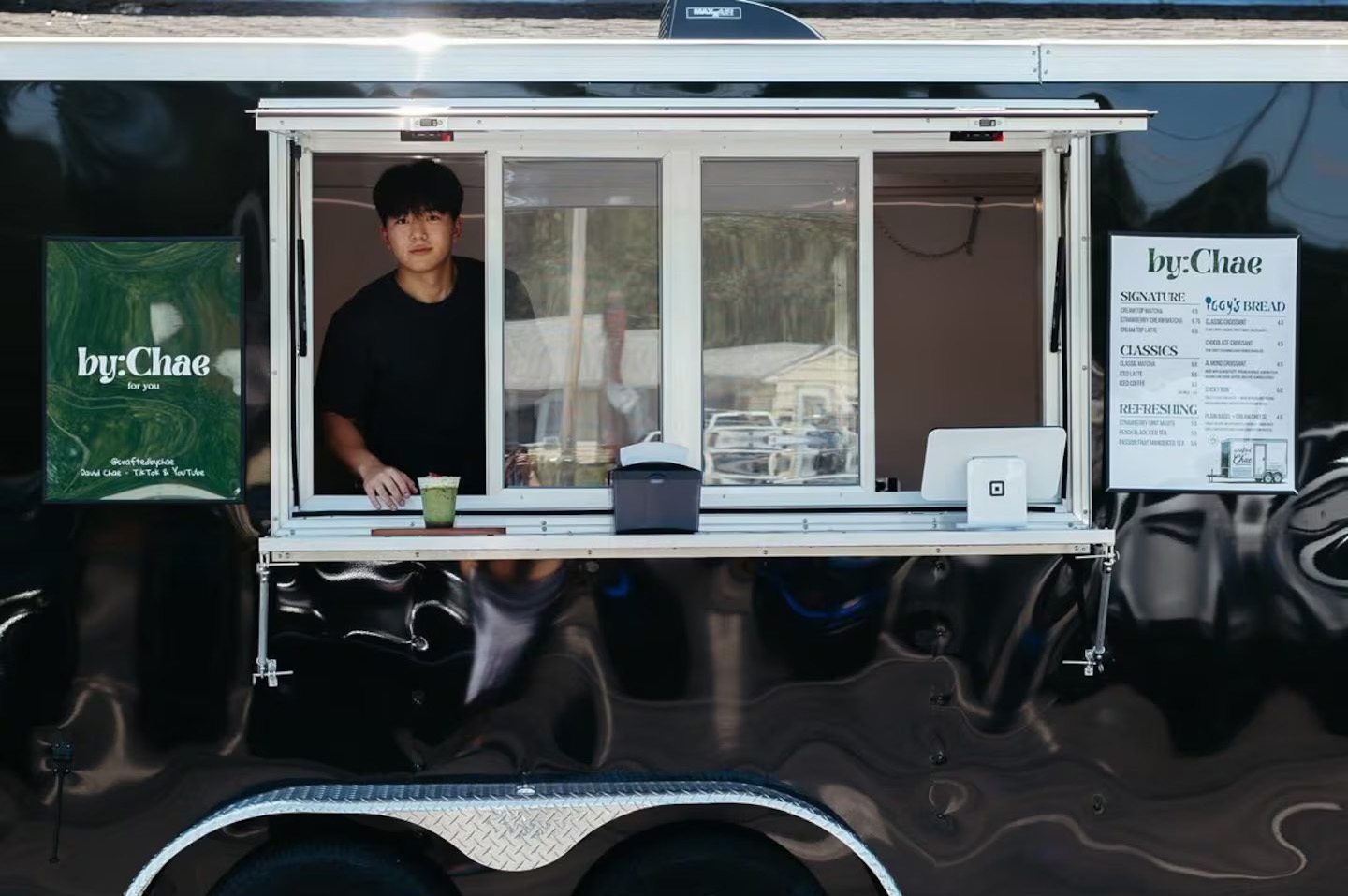
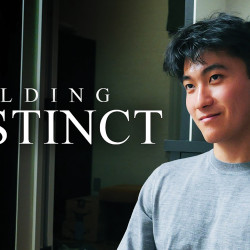
David Chae, a 21-year-old Korean-American college student, operates the pop-up byChae. Chae is emerging as a leading entrepreneur driving Boston's premium matcha culture. Photo = David Chae
David Chae, a 21-year-old Korean-American student who took a leave of absence from Babson College, is emerging as a leading young entrepreneur driving Boston's new premium matcha craze.
Chae's matcha brand byChae, which has drawn long lines at pop-up events across Boston, will open its first brick-and-mortar store on Newbury Street on August 8. It's the first foothold for expanding his brand, built on bold entrepreneurial spirit, flexibility in responding quickly to changing markets, and pragmatic management that minimizes risk.
The Boston Globe has taken notice of his brand. The newspaper recently spotlighted how Chae, a Babson College student, validated his market through a mobile matcha truck and more than 100 pop-up events before moving into one of Boston's premier commercial districts.
In an interview with Boston Korea, Chae revealed he has raised his monthly sales target for the Newbury Street location from the initial $100,000 to $160,000. He plans to go beyond simply selling matcha beverages, collaborating with local small businesses and growing into a company that encompasses multiple food service brands in the long term.
The first store will be located at 222 Newbury Street, on the lower level of Dirty Water Dough Company. It's the former site of a bubble tea shop that recently closed.
Chae signed an eight-month short-term lease with building management company AGEM. It's a strategy to reduce risk compared to a typical long-term contract while testing actual customer demand and sales potential on Newbury Street.
"The space was previously used as a beverage shop, so we could utilize the existing equipment and convert it relatively quickly into the café byChae wanted without major construction," Chae said.
He defined this location not as just another pop-up, but as "a test store for future expansion and the first official store." Over the next eight months, he plans to analyze customer traffic, popular menu items, hourly sales, and operating costs before deciding whether to open long-term stores and expand to other cities.
It's a glimpse of an entrepreneur with a grand business vision who is executing it step by step.
Chae didn't initially plan to go into the matcha business. He had wanted to enter the food service industry since age 13, and initially envisioned a Korean fried chicken business.
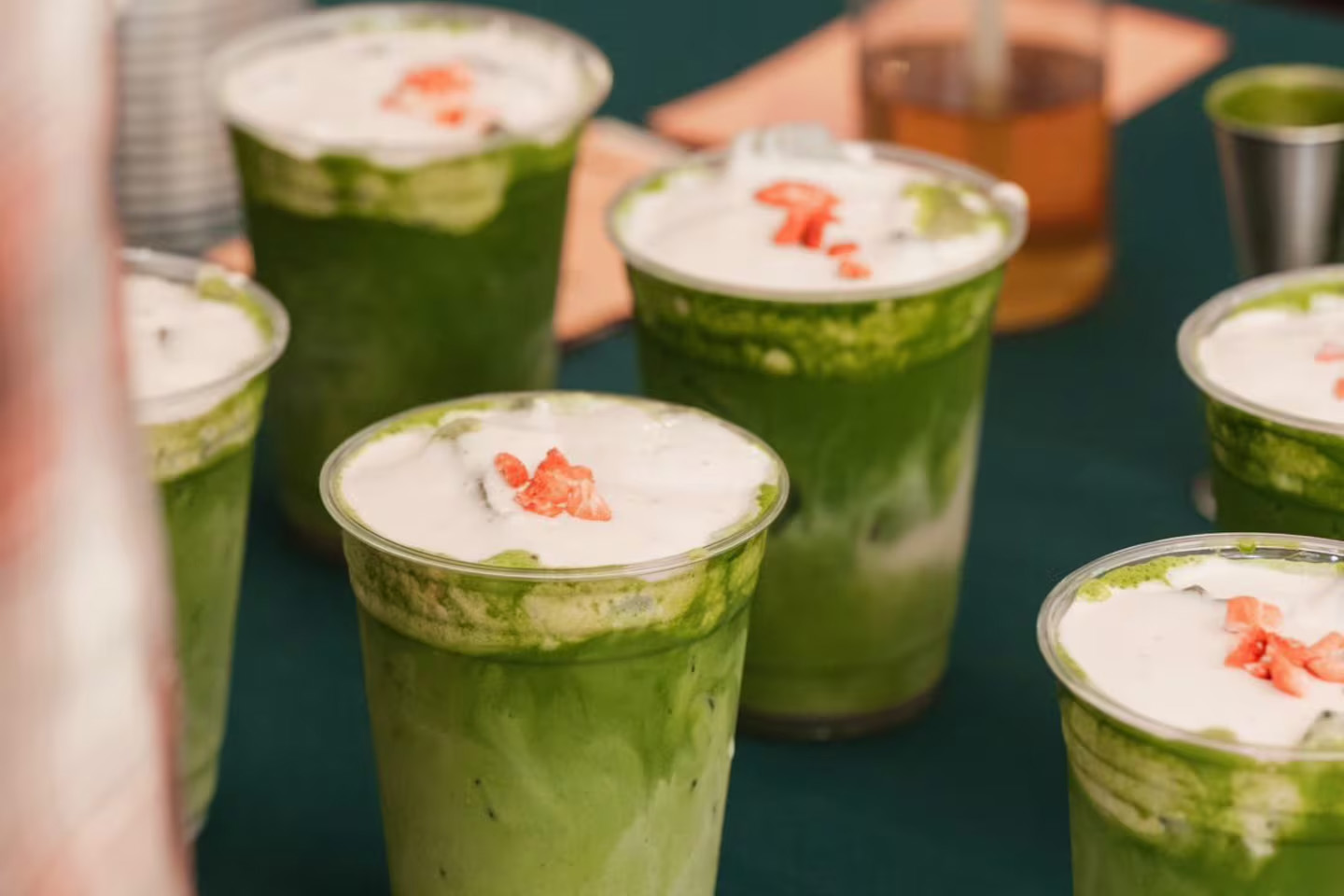 byChae's matcha. (Photo = David Chae)
Born in the United States, Chae moved to Korea at age five and lived there until the eighth grade. His parents then sent him and his sisters to Guam to attend school. After moving to the Boston area, he completed high school in Newton and enrolled at Babson College, well known for its entrepreneurship education.
Babson College ranked second nationally behind Stanford in the Wall Street Journal's 2026 college rankings. The ranking evaluates students' post-graduation economic outcomes, learning environment, graduation rates, and diversity.
Chae, who had run a Korean fried chicken business before entering college, made and sold chicken to students from his dorm room after enrollment.
He later joined a friend's food truck business selling açaí bowls and ice cream, but parted ways due to differences of opinion. With the truck he had purchased, he initially planned to sell bagels, matcha, and coffee together. A mentor then advised him to focus on beverages rather than bagels.
"Rather than choosing a perfectly planned change from the start, it was the result of actually running the business, observing market reactions, and choosing the direction with greater potential," Chae explained. "The U.S. matcha market happened to be growing rapidly, so I focused more on matcha."
He began selling matcha from the truck in earnest in the summer of 2025. As customers flocked to each pop-up event, some events drew lines where people waited nearly two hours for a single drink.
He collaborated with major brands like Gap and Free People, as well as local Pilates studios and universities, and has conducted well over 100 pop-ups to date.
byChae differentiated itself from other matcha brands by utilizing various types of "concept" cold foams. The brand rolled out a series of eye-catching menu items on social media, including drinks incorporating banana pudding, blueberry, and hojicha cream, as well as water-colored "Ocean Foam" and "Jawsberry," created with local apparel company Finatics, which supports shark conservation efforts.
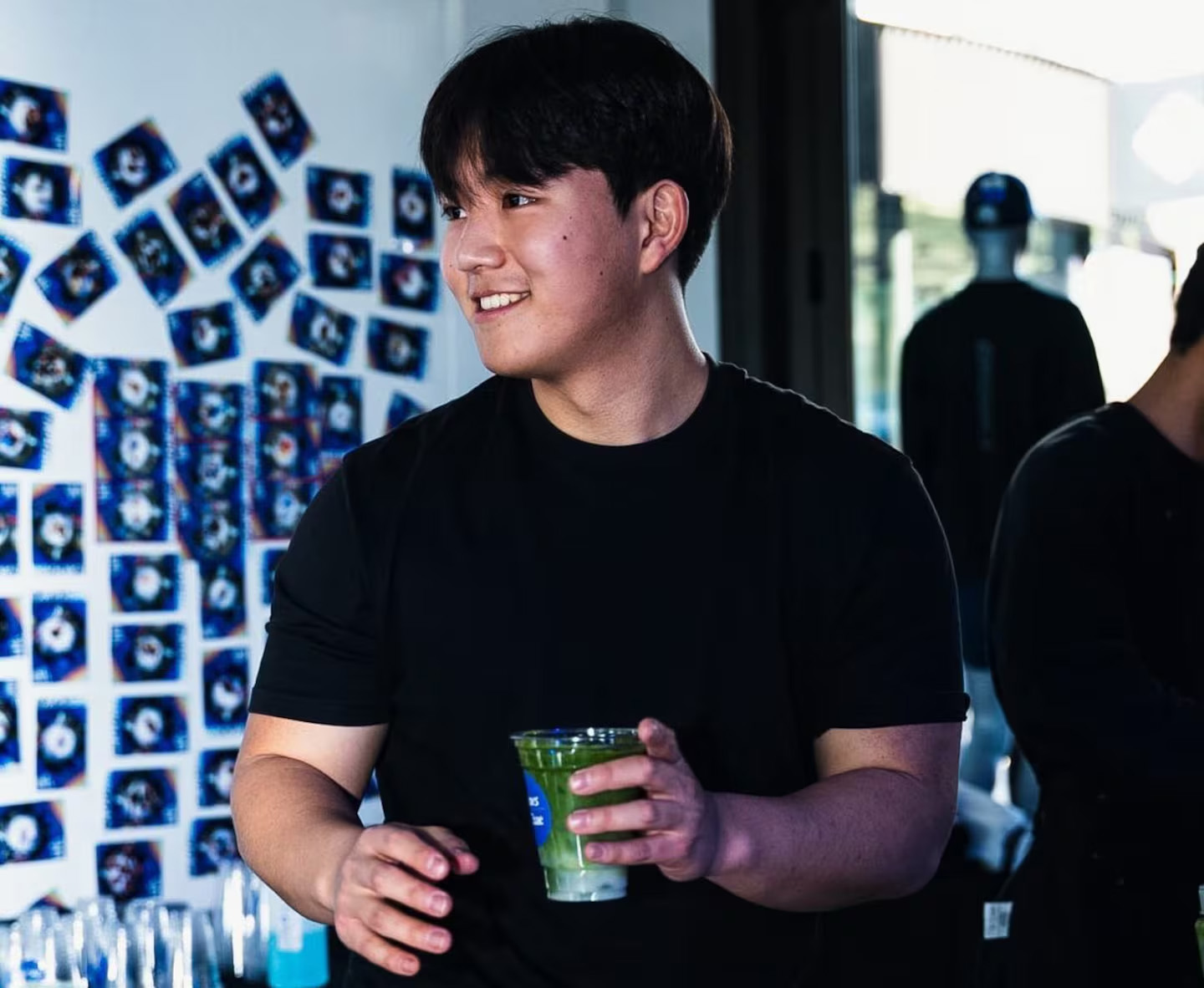 byChae founder David Chae. (Photo = David Chae)
Chae cited matcha's vibrant color and health and wellness image as reasons for its popularity in the United States.
"Matcha's distinctive deep green color shows up well in photos and videos, and visual elements play a big role in the social media era," he said.
He also analyzed that demand from consumers who need caffeine but don't want coffee or energy drinks is growing the matcha market. Matcha contains caffeine along with L-theanine, an amino acid, so many consumers feel it provides a comparatively calmer and more sustained energy than coffee.
The matcha market in the United States is growing rapidly. According to market research firm NIQ, matcha retail sales in the U.S. have increased 86% over the past three years. Matcha's growth is also evident in Japan's green tea exports. According to Japan's Ministry of Agriculture, Forestry and Fisheries, Japanese green tea exports, including matcha, reached 36.4 billion yen in 2024, approximately $252 million at the exchange rate at the time, a 25% increase from the previous year.
Chae imports matcha directly from Yame in Fukuoka Prefecture, a major tea-producing region in Kyushu, Japan. Luck played a role. A matcha company in Yame saw byChae's Instagram and reached out first via email. However, the first transaction was a considerable gamble. Chae wired approximately $8,000 to a company he had never met in person before receiving the product. If the other party hadn't been a trustworthy company, he could have lost the money entirely. Fortunately, the company supplied matcha of the promised quality, and the business relationship that began then continues to this day.
"I was really scared, but fortunately the company kept its promise all the way," he said. "Thanks to that quality, I sincerely believe I'm selling the best matcha in Boston."
Not only his business sense in choosing matcha, but also Chae's method of validating the market has earned high marks at Babson.
Abe Eshghi, a Babson College professor and executive director of the Tariq Farid Franchise Institute, told the Boston Globe, "This kid is phenomenal," recounting how Chae had contacted him to discuss business ideas even before enrolling in college.
Professor Eshghi, a former venture capitalist, said, "Chae didn't just jump into a lease agreement a year ago without testing the market first. He focused on his own niche and what he could offer, and the fact that he's now opening a store on Newbury means that strategy is working."
Chae said the most important thing he gained from Babson was the environment around him rather than the course content. "I learned basic business knowledge like accounting and finance, but seeing students who actually start businesses and take risks up close had a bigger impact," he said. "I learned the attitude of executing ideas directly and correcting them if they fail, rather than pondering them for a long time."
Chae quickly practiced selective focus. He took a leave of absence in December 2025 to concentrate on the business. It was a decision based on the judgment that it was difficult to devote sufficient time to both school and business simultaneously. After taking the leave, sales tripled.
"I thought I couldn't miss the opportunity when the business was growing rapidly," he said. "If I had continued school while running the business in parallel, it would have been difficult to grow as fast as now, and there's a good chance I wouldn't have opened the first store."
His parents generally supported Chae's choice, as he had wanted to do business since childhood. However, his father opposes completely dropping out of college. Chae said he is currently on leave, not dropout status, and continues to consider the issues of business growth and returning to school.
Chae, who chose Babson himself, said, "Many students who want to do business from the start apply to Babson. Students with similar goals share ideas and actually start businesses, so they make each other act faster."
If Harvard and MIT are places where talent from various fields such as technology, research, and policy gather, Babson is focused entirely on entrepreneurship and business as a school, providing a very dense environment for aspiring entrepreneurs, he explained.
Boston's matcha market began growing relatively later than New York or Los Angeles. Chae diagnosed that it's not just a matcha issue, but that the Boston food service market itself is slower to accept new trends than New York or California.
"Boston is a market where new trends grow slowly, but once consumers start accepting them, there's also the advantage that loyalty can form at a high level," he said.
As byChae has gained popularity, interest in Boston's matcha market is also growing rapidly. Recently in Boston, brands and pop-ups featuring matcha as their core menu have appeared one after another, including byChae, Mizu Matcha, Matcha Cafe Maiko, Kyo Matcha, Nomu, Lucy & Jane, and Junbi.
A Korean-American man surnamed Hyun, who lives in Lexington, visited a matcha pop-up in Brookline with his wife last weekend. He said the wait wasn't long and he could buy drinks right away, but the price of $9 per cup felt somewhat burdensome. However, he said he was satisfied with the taste of the matcha.
There are no official statistics tracking the number of matcha specialty shops in the Boston area yet. Many of the newly emerging brands are run by young entrepreneurs who validate the marketability of their menus and brands through pop-ups before opening formal stores.
"In Boston, the permits and administrative procedures for opening a formal store are slow and complex in some ways," Chae said. "It's a much more realistic choice to check customer reactions through pop-ups rather than investing large capital from the start."
Pop-ups also provide consumers with new experiences they can access only for a limited period. As event locations and menus are quickly shared through social media, the long waiting lines themselves become promotional content again.
Chae said his Korean background also naturally influenced byChae's growth.
"It's not that I looked at Korean culture from the outside and intentionally applied it to the brand, but the sensibility and values formed while growing up in Korea until the eighth grade naturally entered the brand," he explained.
Korean people's culture of valuing the sharing of good food together and paying much attention to details of menu, space, and service is also reflected in byChae.
Nevertheless, he defined byChae not as a "Korean brand" but as "an American brand created in America by an entrepreneur with a Korean background." His long-term plan is to grow it into a global brand enjoyed by consumers worldwide, not limited to a specific country or market.
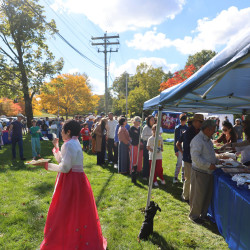
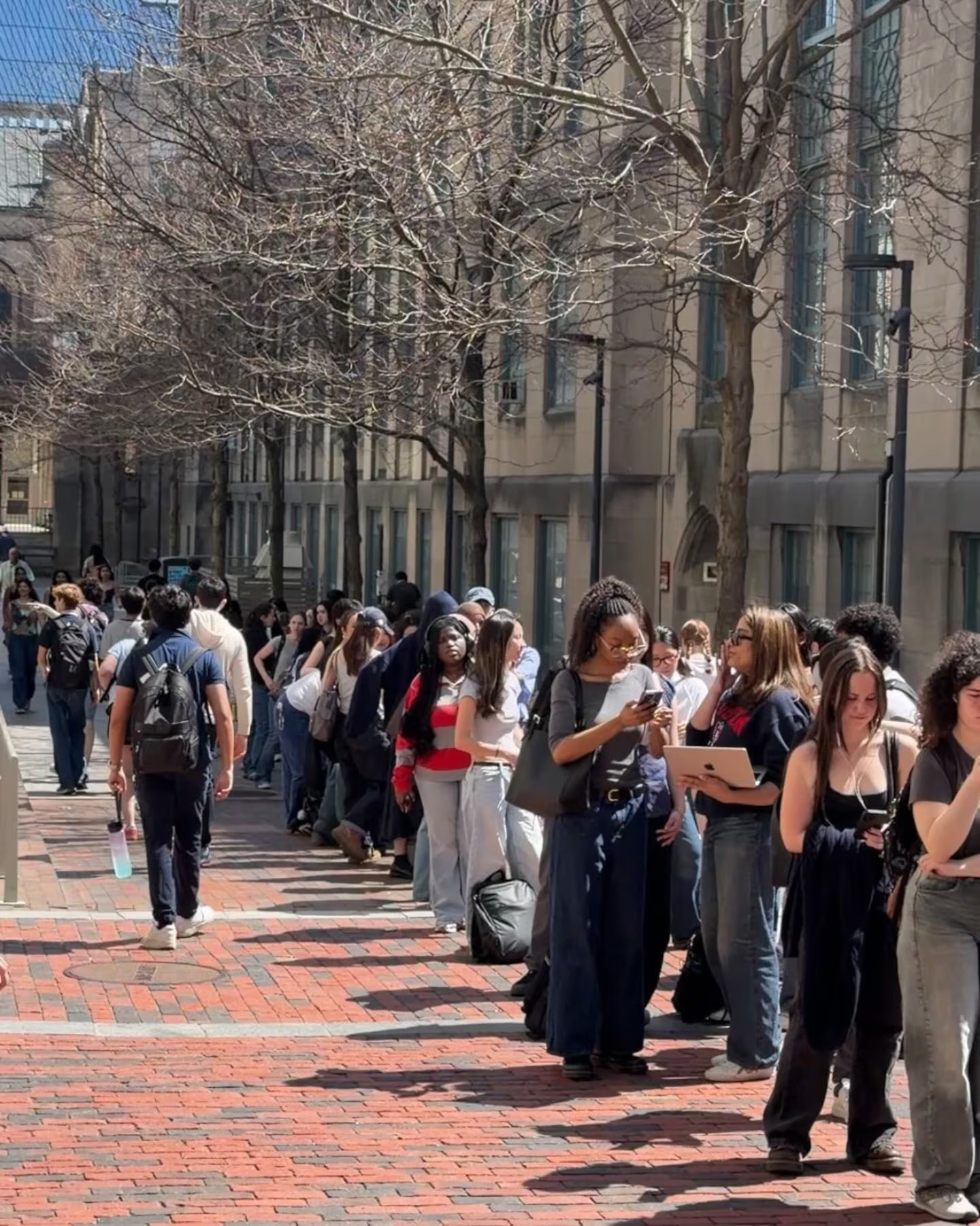 Some students in line at a pop-up event at a Boston university had to wait nearly two hours. (Photo = David Chae)
As the business grows rapidly, the most difficult things are maintaining work-life balance and managing multiple employees.
"While preparing to open the store, I invest most of my time in the business, so it's hard to secure time for exercise or personal time," Chae said. "Managing multiple people at a young age is also tough, but at the same time it's the most meaningful part."
He aims for $160,000 in monthly sales at the Newbury Street store, but emphasized that creating a brand people love is more important than sales itself.
byChae also plans to play the role of a collaboration platform that introduces products of individual creators and small business owners hidden throughout the city in its stores and shares their stories with customers.
His plan doesn't end with a single matcha shop. His ultimate goal is to expand byChae to other U.S. cities such as New York and Los Angeles, as well as global markets, and in the long term to establish a Hospitality Management Group that develops and operates modern cafés and food service brands.
"I want to provide people with good food, good service, and memorable experiences through multiple brands," Chae said. Planting good experiences in people's memories—that was the 21-year-old's message for business success.
[email protected]
Chae's matcha brand byChae, which has drawn long lines at pop-up events across Boston, will open its first brick-and-mortar store on Newbury Street on August 8. It's the first foothold for expanding his brand, built on bold entrepreneurial spirit, flexibility in responding quickly to changing markets, and pragmatic management that minimizes risk.
The Boston Globe has taken notice of his brand. The newspaper recently spotlighted how Chae, a Babson College student, validated his market through a mobile matcha truck and more than 100 pop-up events before moving into one of Boston's premier commercial districts.
In an interview with Boston Korea, Chae revealed he has raised his monthly sales target for the Newbury Street location from the initial $100,000 to $160,000. He plans to go beyond simply selling matcha beverages, collaborating with local small businesses and growing into a company that encompasses multiple food service brands in the long term.
The first store will be located at 222 Newbury Street, on the lower level of Dirty Water Dough Company. It's the former site of a bubble tea shop that recently closed.
Chae signed an eight-month short-term lease with building management company AGEM. It's a strategy to reduce risk compared to a typical long-term contract while testing actual customer demand and sales potential on Newbury Street.
"The space was previously used as a beverage shop, so we could utilize the existing equipment and convert it relatively quickly into the café byChae wanted without major construction," Chae said.
He defined this location not as just another pop-up, but as "a test store for future expansion and the first official store." Over the next eight months, he plans to analyze customer traffic, popular menu items, hourly sales, and operating costs before deciding whether to open long-term stores and expand to other cities.
It's a glimpse of an entrepreneur with a grand business vision who is executing it step by step.
Chae didn't initially plan to go into the matcha business. He had wanted to enter the food service industry since age 13, and initially envisioned a Korean fried chicken business.
byChae's matcha. (Photo = David Chae)Born in the United States, Chae moved to Korea at age five and lived there until the eighth grade. His parents then sent him and his sisters to Guam to attend school. After moving to the Boston area, he completed high school in Newton and enrolled at Babson College, well known for its entrepreneurship education.
Babson College ranked second nationally behind Stanford in the Wall Street Journal's 2026 college rankings. The ranking evaluates students' post-graduation economic outcomes, learning environment, graduation rates, and diversity.
Chae, who had run a Korean fried chicken business before entering college, made and sold chicken to students from his dorm room after enrollment.
He later joined a friend's food truck business selling açaí bowls and ice cream, but parted ways due to differences of opinion. With the truck he had purchased, he initially planned to sell bagels, matcha, and coffee together. A mentor then advised him to focus on beverages rather than bagels.
"Rather than choosing a perfectly planned change from the start, it was the result of actually running the business, observing market reactions, and choosing the direction with greater potential," Chae explained. "The U.S. matcha market happened to be growing rapidly, so I focused more on matcha."
He began selling matcha from the truck in earnest in the summer of 2025. As customers flocked to each pop-up event, some events drew lines where people waited nearly two hours for a single drink.
He collaborated with major brands like Gap and Free People, as well as local Pilates studios and universities, and has conducted well over 100 pop-ups to date.
byChae differentiated itself from other matcha brands by utilizing various types of "concept" cold foams. The brand rolled out a series of eye-catching menu items on social media, including drinks incorporating banana pudding, blueberry, and hojicha cream, as well as water-colored "Ocean Foam" and "Jawsberry," created with local apparel company Finatics, which supports shark conservation efforts.
byChae founder David Chae. (Photo = David Chae)Chae cited matcha's vibrant color and health and wellness image as reasons for its popularity in the United States.
"Matcha's distinctive deep green color shows up well in photos and videos, and visual elements play a big role in the social media era," he said.
He also analyzed that demand from consumers who need caffeine but don't want coffee or energy drinks is growing the matcha market. Matcha contains caffeine along with L-theanine, an amino acid, so many consumers feel it provides a comparatively calmer and more sustained energy than coffee.
The matcha market in the United States is growing rapidly. According to market research firm NIQ, matcha retail sales in the U.S. have increased 86% over the past three years. Matcha's growth is also evident in Japan's green tea exports. According to Japan's Ministry of Agriculture, Forestry and Fisheries, Japanese green tea exports, including matcha, reached 36.4 billion yen in 2024, approximately $252 million at the exchange rate at the time, a 25% increase from the previous year.
Chae imports matcha directly from Yame in Fukuoka Prefecture, a major tea-producing region in Kyushu, Japan. Luck played a role. A matcha company in Yame saw byChae's Instagram and reached out first via email. However, the first transaction was a considerable gamble. Chae wired approximately $8,000 to a company he had never met in person before receiving the product. If the other party hadn't been a trustworthy company, he could have lost the money entirely. Fortunately, the company supplied matcha of the promised quality, and the business relationship that began then continues to this day.
"I was really scared, but fortunately the company kept its promise all the way," he said. "Thanks to that quality, I sincerely believe I'm selling the best matcha in Boston."
Not only his business sense in choosing matcha, but also Chae's method of validating the market has earned high marks at Babson.
Abe Eshghi, a Babson College professor and executive director of the Tariq Farid Franchise Institute, told the Boston Globe, "This kid is phenomenal," recounting how Chae had contacted him to discuss business ideas even before enrolling in college.
Professor Eshghi, a former venture capitalist, said, "Chae didn't just jump into a lease agreement a year ago without testing the market first. He focused on his own niche and what he could offer, and the fact that he's now opening a store on Newbury means that strategy is working."
Chae said the most important thing he gained from Babson was the environment around him rather than the course content. "I learned basic business knowledge like accounting and finance, but seeing students who actually start businesses and take risks up close had a bigger impact," he said. "I learned the attitude of executing ideas directly and correcting them if they fail, rather than pondering them for a long time."
Chae quickly practiced selective focus. He took a leave of absence in December 2025 to concentrate on the business. It was a decision based on the judgment that it was difficult to devote sufficient time to both school and business simultaneously. After taking the leave, sales tripled.
"I thought I couldn't miss the opportunity when the business was growing rapidly," he said. "If I had continued school while running the business in parallel, it would have been difficult to grow as fast as now, and there's a good chance I wouldn't have opened the first store."
His parents generally supported Chae's choice, as he had wanted to do business since childhood. However, his father opposes completely dropping out of college. Chae said he is currently on leave, not dropout status, and continues to consider the issues of business growth and returning to school.
Chae, who chose Babson himself, said, "Many students who want to do business from the start apply to Babson. Students with similar goals share ideas and actually start businesses, so they make each other act faster."
If Harvard and MIT are places where talent from various fields such as technology, research, and policy gather, Babson is focused entirely on entrepreneurship and business as a school, providing a very dense environment for aspiring entrepreneurs, he explained.
Boston's matcha market began growing relatively later than New York or Los Angeles. Chae diagnosed that it's not just a matcha issue, but that the Boston food service market itself is slower to accept new trends than New York or California.
"Boston is a market where new trends grow slowly, but once consumers start accepting them, there's also the advantage that loyalty can form at a high level," he said.
As byChae has gained popularity, interest in Boston's matcha market is also growing rapidly. Recently in Boston, brands and pop-ups featuring matcha as their core menu have appeared one after another, including byChae, Mizu Matcha, Matcha Cafe Maiko, Kyo Matcha, Nomu, Lucy & Jane, and Junbi.
A Korean-American man surnamed Hyun, who lives in Lexington, visited a matcha pop-up in Brookline with his wife last weekend. He said the wait wasn't long and he could buy drinks right away, but the price of $9 per cup felt somewhat burdensome. However, he said he was satisfied with the taste of the matcha.
There are no official statistics tracking the number of matcha specialty shops in the Boston area yet. Many of the newly emerging brands are run by young entrepreneurs who validate the marketability of their menus and brands through pop-ups before opening formal stores.
"In Boston, the permits and administrative procedures for opening a formal store are slow and complex in some ways," Chae said. "It's a much more realistic choice to check customer reactions through pop-ups rather than investing large capital from the start."
Pop-ups also provide consumers with new experiences they can access only for a limited period. As event locations and menus are quickly shared through social media, the long waiting lines themselves become promotional content again.
Chae said his Korean background also naturally influenced byChae's growth.
"It's not that I looked at Korean culture from the outside and intentionally applied it to the brand, but the sensibility and values formed while growing up in Korea until the eighth grade naturally entered the brand," he explained.
Korean people's culture of valuing the sharing of good food together and paying much attention to details of menu, space, and service is also reflected in byChae.
Nevertheless, he defined byChae not as a "Korean brand" but as "an American brand created in America by an entrepreneur with a Korean background." His long-term plan is to grow it into a global brand enjoyed by consumers worldwide, not limited to a specific country or market.
Some students in line at a pop-up event at a Boston university had to wait nearly two hours. (Photo = David Chae)As the business grows rapidly, the most difficult things are maintaining work-life balance and managing multiple employees.
"While preparing to open the store, I invest most of my time in the business, so it's hard to secure time for exercise or personal time," Chae said. "Managing multiple people at a young age is also tough, but at the same time it's the most meaningful part."
He aims for $160,000 in monthly sales at the Newbury Street store, but emphasized that creating a brand people love is more important than sales itself.
byChae also plans to play the role of a collaboration platform that introduces products of individual creators and small business owners hidden throughout the city in its stores and shares their stories with customers.
His plan doesn't end with a single matcha shop. His ultimate goal is to expand byChae to other U.S. cities such as New York and Los Angeles, as well as global markets, and in the long term to establish a Hospitality Management Group that develops and operates modern cafés and food service brands.
"I want to provide people with good food, good service, and memorable experiences through multiple brands," Chae said. Planting good experiences in people's memories—that was the 21-year-old's message for business success.
[email protected]
This article was translated from the Korean original with the assistance of AI and reviewed by Boston Korea editors.
Original Korean article: https://bostonkorea.com/bbs/board.php?bo_table=news&wr_id=46389
댓글목록
등록된 댓글이 없습니다.