Korean-American Chef Wins Over Worcester With Chicken Wings at RubyDoo
페이지 정보
작성자 장명술 편집장 작성일본문
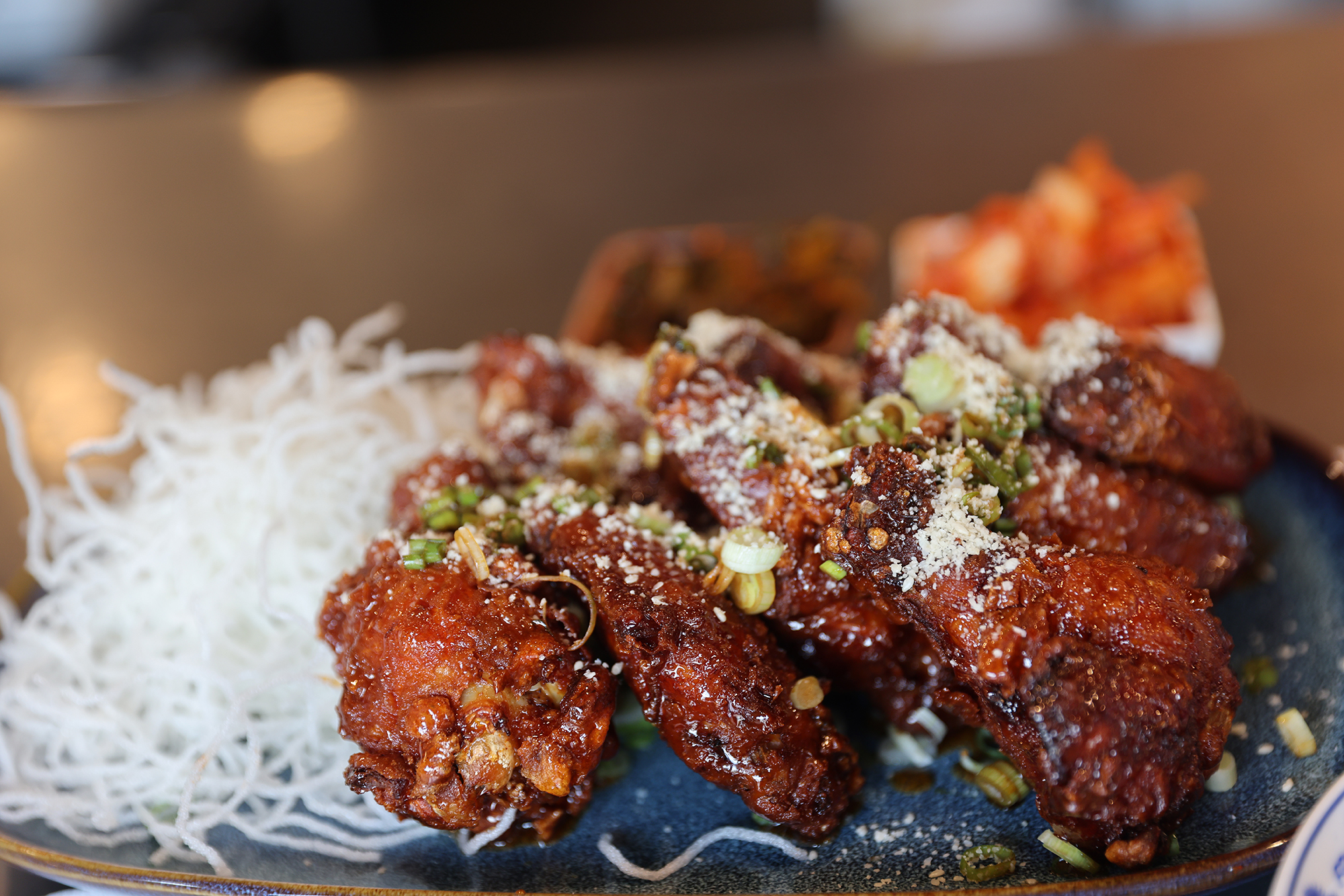
Honey gochujang chicken wings, RubyDoo's most popular dish
(Boston = Boston Korea) Reporter Myong Sool Chang = Chicken wings are coated with potato starch, double-fried, then brushed with a sauce made from honey and gochujang. This is Korean-style chicken wings, the signature dish of RubyDoo, a Korean fusion restaurant located in Worcester Public Market. The crispy frying and sweet gochujang sauce embody the vision of Korean-American owner-chef Andrew Day: to offer familiar flavors to Koreans while opening the door to Korean cuisine for Americans. Meeting with Boston Korea at the restaurant in Worcester Public Market on August 28, Andrew introduced the chicken wings as the most popular item on the menu. According to him, a local radio host who had become a fan of the restaurant recommended RubyDoo for a chicken wing competition, and they won the vote among listeners from central Massachusetts and northern Connecticut.
But the story Andrew wants to tell from this small restaurant doesn't stop at the popularity of chicken wings. It's about passing down to the next generation the food his mother brought from Korea and the family's memories.
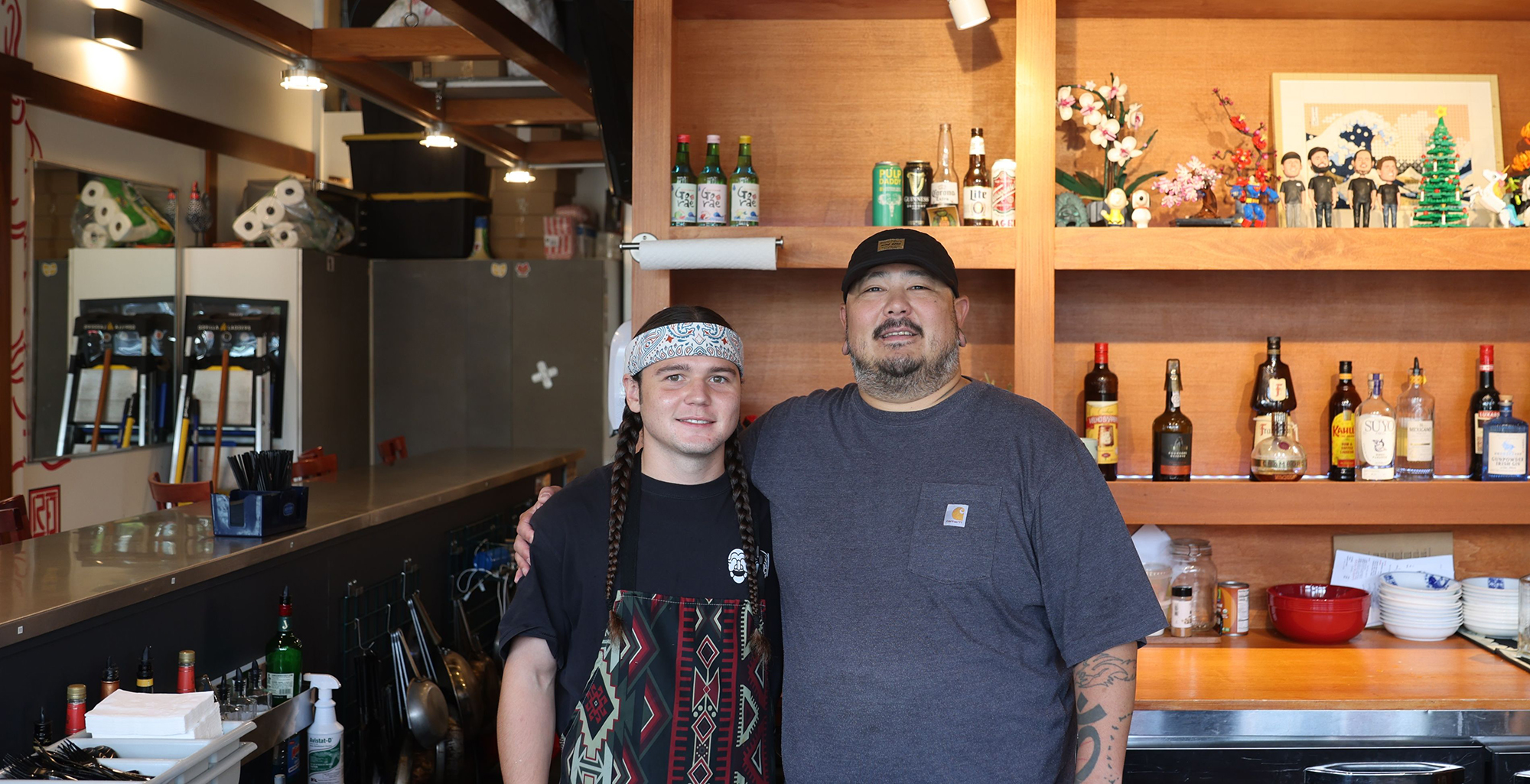 Andrew Day (right), who runs Korean restaurant RubyDoo at Worcester Public Market, with his nephew who helps with kitchen and operations
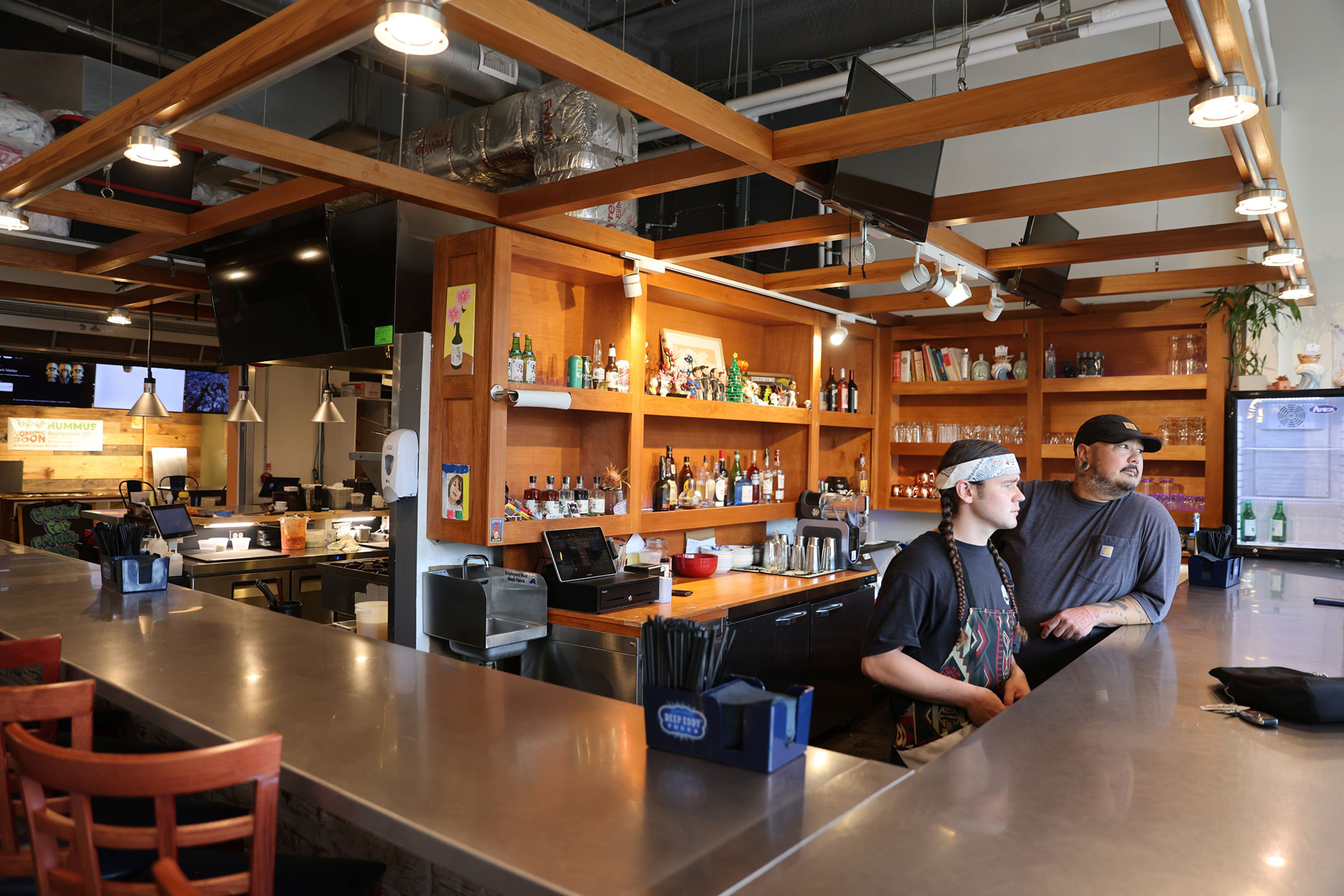 RubyDoo's bar area; most seating is at the bar with 3-4 tables available
Languages may be forgotten over generations, but food remains even after many generations pass. It's something easily observed in America. "I hope that eight generations, ten generations from now, our family will still be eating kimchi made from the recipe my mother passed down," he said. For Andrew, Korean food is a way to reveal his roots. He's proud to be Korean, and cooking is how he expresses that feeling.
Andrew started cooking in his early twenties on Martha's Vineyard. He then spent over 20 years building kitchen experience in Boston, West Palm Beach and Key West, Florida, making diverse cuisines. As a chef, he wanted to learn to make any kind of food, but he had long held the dream of opening his own restaurant serving Korean cuisine. That dream became reality in September 2024 at Worcester Public Market. RubyDoo will celebrate its second anniversary on September 25. The restaurant's name comes from a nickname he used for his first daughter, Ruby.
He opened RubyDoo because he wanted to make food his own way in a small space. "I wanted to create an atmosphere where people share food like at a Korean family's dinner table, having drinks and enjoying conversation," he explained. When deciding to go independent, Andrew was exhausted from restaurant life. He had to work to support his family, but the restaurant industry after COVID-19 was grueling, and coordinating with many staff members and their different opinions was burdensome. He wanted to focus on the food itself again.
While helping with consulting work at the public market, he discovered an empty space. With his mother's financial help, he prepared the restaurant, doing the painting and carpentry work himself. It was a rare opportunity where years of accumulated experience and family support came together in one place.
RubyDoo's food starts with his mother's recipes but doesn't stop at reproducing them. The various cultures and ingredients Andrew encountered growing up in America naturally blend in.
He explained that there are many commonalities connecting cultures through food and flavors. He added his own interpretation to galbi as well. Instead of LA galbi, which is thinly sliced across the bone, he cooks large bone-in short ribs and applies a Korean-style barbecue sauce made with watermelon. After cooking, he separates the meat from the bone, slices it, places it back on the bone, and serves it with watermelon rind kimchi. The name is "MA galbi," using the abbreviation for Massachusetts.
This experimental process was also revealed in a separate conversation with his mother, Sasha Kim. When Andrew prepared naengmyeon as a summer menu item, he used soba noodles instead of the chewy naengmyeon noodles. At first, Kim asked why, but after hearing his explanation about considering American customers who find the unfamiliar texture difficult, and trying it herself, she understood.
Mother Kim said about her son's cooking, "He grew up eating it, so he's adding his own touch to the recipes he got from me." He keeps the core of familiar foods while finding ways for customers here to enjoy them.
Despite his various experiments, Andrew's favorite Korean dish is kimchi jjigae. "When I was sick, my mother would make kimchi jjigae, and when there was something to celebrate, we ate kimchi jjigae. Same when drinking," he said—his tastes are typically Korean. Perhaps that's why kimchi jjigae has been on RubyDoo's menu since opening. Other menu items change every two to three months. The small kitchen offers about 11 dishes. This comes from the belief that both customers and the cook need new experiences. "I have so many ideas I want to try in my head. Now customers know the menu changes and come expecting those changes," he added. However, with limitations in space and ingredient storage, he can't always recreate past menu items on demand. The current menu operates around ingredients, introducing new dishes according to season and inspiration.
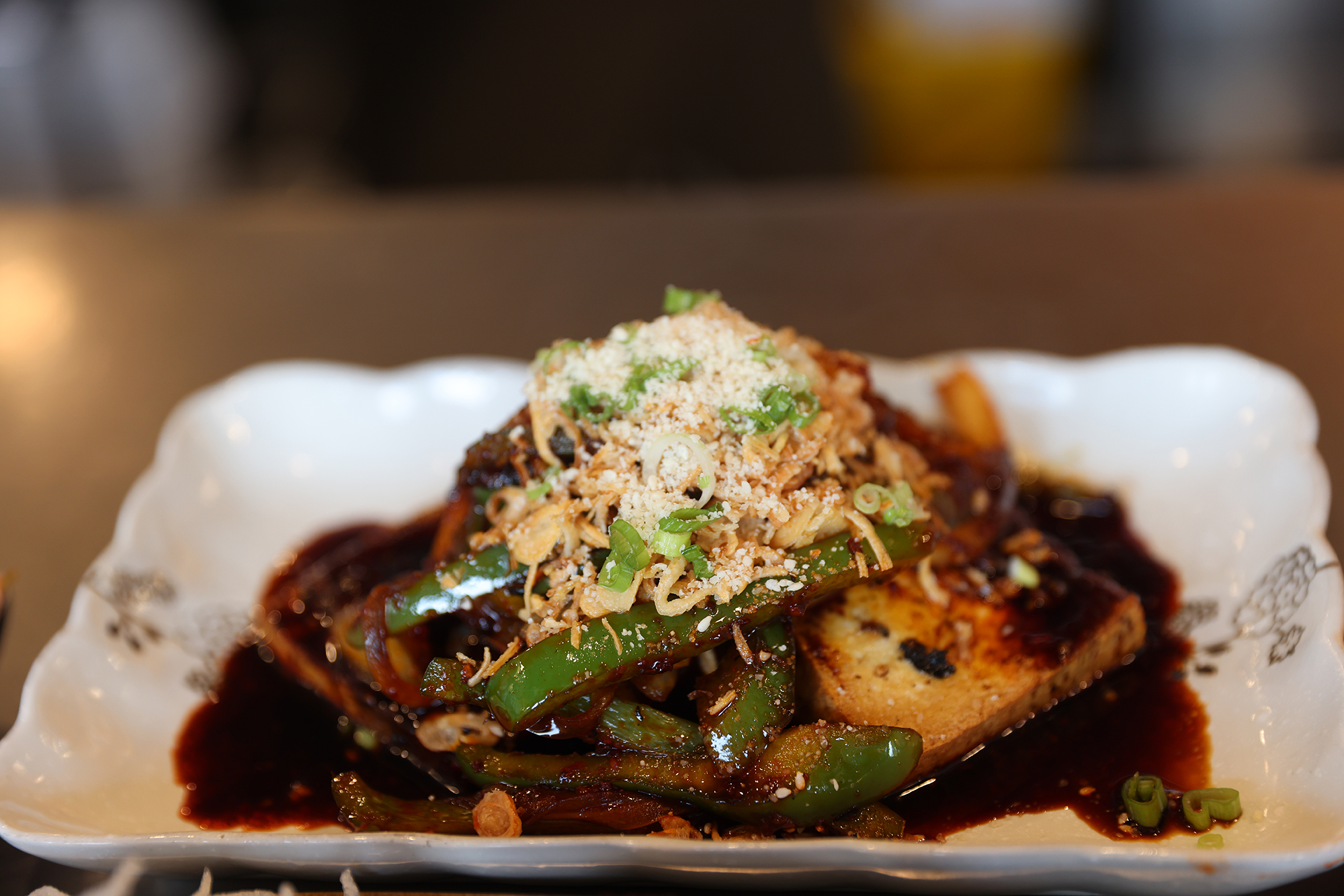 RubyDoo's pan-fried tofu
Coexisting with neighboring stores in the public market is also an operating principle. Even when his mother suggested dumplings or ramen, he didn't add them to the menu because there were already stores selling similar foods in the market. For beer and wine too, considering the nearby liquor store, he didn't expand the selection much, instead focusing on soju and cocktails.
The growth Andrew wants is not about greatly expanding the restaurant's size. He wants to maintain a family-centered space where his nephew helps with the kitchen and operations, and his wife and children pitch in. He's thinking about expanding a bit, but said he doesn't want to return to managing many employees.
RubyDoo's Korean food is cuisine where the mother's home cooking and the son's American experience come together on a plate. What Andrew wants to leave for the next generation is also that taste and memory.
RubyDoo Restaurant, Worcester Public Market, Harding Street side, 160 Green St, Worcester, MA
[email protected]
But the story Andrew wants to tell from this small restaurant doesn't stop at the popularity of chicken wings. It's about passing down to the next generation the food his mother brought from Korea and the family's memories.
Andrew Day (right), who runs Korean restaurant RubyDoo at Worcester Public Market, with his nephew who helps with kitchen and operations RubyDoo's bar area; most seating is at the bar with 3-4 tables availableLanguages may be forgotten over generations, but food remains even after many generations pass. It's something easily observed in America. "I hope that eight generations, ten generations from now, our family will still be eating kimchi made from the recipe my mother passed down," he said. For Andrew, Korean food is a way to reveal his roots. He's proud to be Korean, and cooking is how he expresses that feeling.
Andrew started cooking in his early twenties on Martha's Vineyard. He then spent over 20 years building kitchen experience in Boston, West Palm Beach and Key West, Florida, making diverse cuisines. As a chef, he wanted to learn to make any kind of food, but he had long held the dream of opening his own restaurant serving Korean cuisine. That dream became reality in September 2024 at Worcester Public Market. RubyDoo will celebrate its second anniversary on September 25. The restaurant's name comes from a nickname he used for his first daughter, Ruby.
He opened RubyDoo because he wanted to make food his own way in a small space. "I wanted to create an atmosphere where people share food like at a Korean family's dinner table, having drinks and enjoying conversation," he explained. When deciding to go independent, Andrew was exhausted from restaurant life. He had to work to support his family, but the restaurant industry after COVID-19 was grueling, and coordinating with many staff members and their different opinions was burdensome. He wanted to focus on the food itself again.
While helping with consulting work at the public market, he discovered an empty space. With his mother's financial help, he prepared the restaurant, doing the painting and carpentry work himself. It was a rare opportunity where years of accumulated experience and family support came together in one place.
RubyDoo's food starts with his mother's recipes but doesn't stop at reproducing them. The various cultures and ingredients Andrew encountered growing up in America naturally blend in.
He explained that there are many commonalities connecting cultures through food and flavors. He added his own interpretation to galbi as well. Instead of LA galbi, which is thinly sliced across the bone, he cooks large bone-in short ribs and applies a Korean-style barbecue sauce made with watermelon. After cooking, he separates the meat from the bone, slices it, places it back on the bone, and serves it with watermelon rind kimchi. The name is "MA galbi," using the abbreviation for Massachusetts.
This experimental process was also revealed in a separate conversation with his mother, Sasha Kim. When Andrew prepared naengmyeon as a summer menu item, he used soba noodles instead of the chewy naengmyeon noodles. At first, Kim asked why, but after hearing his explanation about considering American customers who find the unfamiliar texture difficult, and trying it herself, she understood.
Mother Kim said about her son's cooking, "He grew up eating it, so he's adding his own touch to the recipes he got from me." He keeps the core of familiar foods while finding ways for customers here to enjoy them.
Despite his various experiments, Andrew's favorite Korean dish is kimchi jjigae. "When I was sick, my mother would make kimchi jjigae, and when there was something to celebrate, we ate kimchi jjigae. Same when drinking," he said—his tastes are typically Korean. Perhaps that's why kimchi jjigae has been on RubyDoo's menu since opening. Other menu items change every two to three months. The small kitchen offers about 11 dishes. This comes from the belief that both customers and the cook need new experiences. "I have so many ideas I want to try in my head. Now customers know the menu changes and come expecting those changes," he added. However, with limitations in space and ingredient storage, he can't always recreate past menu items on demand. The current menu operates around ingredients, introducing new dishes according to season and inspiration.
RubyDoo's pan-fried tofuCoexisting with neighboring stores in the public market is also an operating principle. Even when his mother suggested dumplings or ramen, he didn't add them to the menu because there were already stores selling similar foods in the market. For beer and wine too, considering the nearby liquor store, he didn't expand the selection much, instead focusing on soju and cocktails.
The growth Andrew wants is not about greatly expanding the restaurant's size. He wants to maintain a family-centered space where his nephew helps with the kitchen and operations, and his wife and children pitch in. He's thinking about expanding a bit, but said he doesn't want to return to managing many employees.
RubyDoo's Korean food is cuisine where the mother's home cooking and the son's American experience come together on a plate. What Andrew wants to leave for the next generation is also that taste and memory.
RubyDoo Restaurant, Worcester Public Market, Harding Street side, 160 Green St, Worcester, MA
[email protected]
This article was translated from the Korean original with the assistance of AI and reviewed by Boston Korea editors.
Original Korean article: https://bostonkorea.com/bbs/board.php?bo_table=news&wr_id=46583
Read next
댓글목록
등록된 댓글이 없습니다.